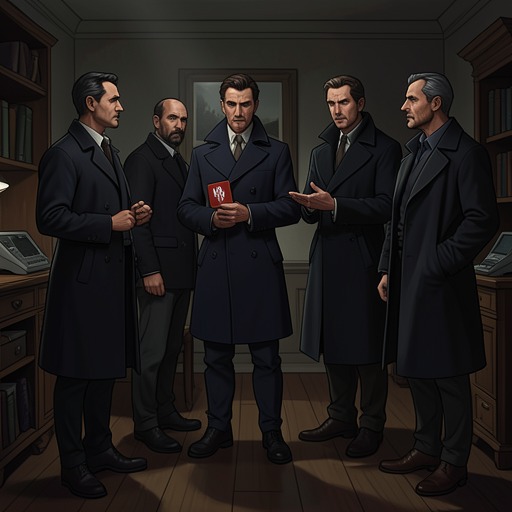
Comrades of the Red Hand—Queen Varaga
The Secret of ChimneysThe relationship between the Comrades of the Red Hand and Queen Varaga is an alliance founded on a bribe and broken by ambition: the revolutionary organization recruits the Parisian actress Angèle Mory to lure King Nicholas IV into its hands, but she instead wins his love, becomes queen, and betrays the purpose for which she was enlisted. The Comrades’ retaliation and the revolution that ends with the king and queen dead make their connection one of conspiracy, exploitation, and violent political opposition.
Recruitment and the Intended Plot
When Paris prepared for King Nicholas IV’s visit, the French Sûreté was instructed to protect him and monitor the Comrades of the Red Hand. The organization approached Angèle Mory, an actress at the Folies Bergère whom the authorities already suspected of associating with King Victor. It offered her a large payment to captivate the young king and draw him to a place where the revolutionaries could act. She accepted the bribe and promised to carry out the assignment.
The arrangement made Angèle an instrument of the Comrades’ plan, but not a dependable one. The revolutionaries sought access to the king through her attraction and influence; their bargain gave her a route into the royal world, while leaving them unable to control what she would do once she had the king’s attention.
Ambition and Betrayal
Angèle succeeded in captivating Nicholas, who fell deeply in love with her and showered her with jewels. Rather than remain a paid accomplice or become the king’s mistress, she conceived a greater ambition: to become queen. She was presented in Herzoslovakia as Countess Varaga Popoleffsky, supposedly descended from the Romanovs, and ultimately took the name Queen Varaga.
Her rise reversed the purpose of the original bargain. The Comrades had recruited her to help bring down the king; she used the opportunity to enter his court and share his crown. The account identifies her as cleverer and more ambitious than the revolutionaries had expected. Her betrayal was not a simple abandonment of their plan but a transformation of its intended instrument into a monarch who could act from inside the very political order they opposed.
Retaliation and Revolution
The Comrades were furious at Varaga’s betrayal and made two attempts on her life. Their conflict with her thus continued after her ascent to the throne: the former collaborators became active enemies, and the organization’s efforts against the queen formed part of the wider pressure on the monarchy.
The country was eventually stirred into revolution, in which both King Nicholas IV and Queen Varaga perished. Their bodies were recovered horribly mutilated and barely recognizable, a detail presented as evidence of popular fury against the foreign queen of low birth. The revolution brought the conflict between the Comrades and Varaga into a larger national collapse, though the account does not specify that the organization alone caused the uprising or directly killed the royal couple.
The Relationship’s Wider Reach
The Comrades’ political operations extend beyond their dealings with Varaga. The memoirs of Count Stylptitch were secretly conveyed away before his death and sent to James McGrath, a Canadian then in Africa. The later investigation also places George Lomax, Herman Isaacstein, and the Herzoslovakian Loyalist Party in jeopardy over the affair. These details situate the organization’s revolutionary conflict within a broader struggle over political secrets and the future of Herzoslovakia.
The relationship is ultimately defined by a failed attempt to turn personal attraction into a revolutionary tool. The Comrades’ bribe gives Varaga access to the king, but her success makes her their opponent; their retaliation cannot prevent the monarchy’s destruction, and the revolution that follows kills the queen as well as the king. The reversal makes their alliance a compact example of how political conspiracies can empower the person they intend to use.